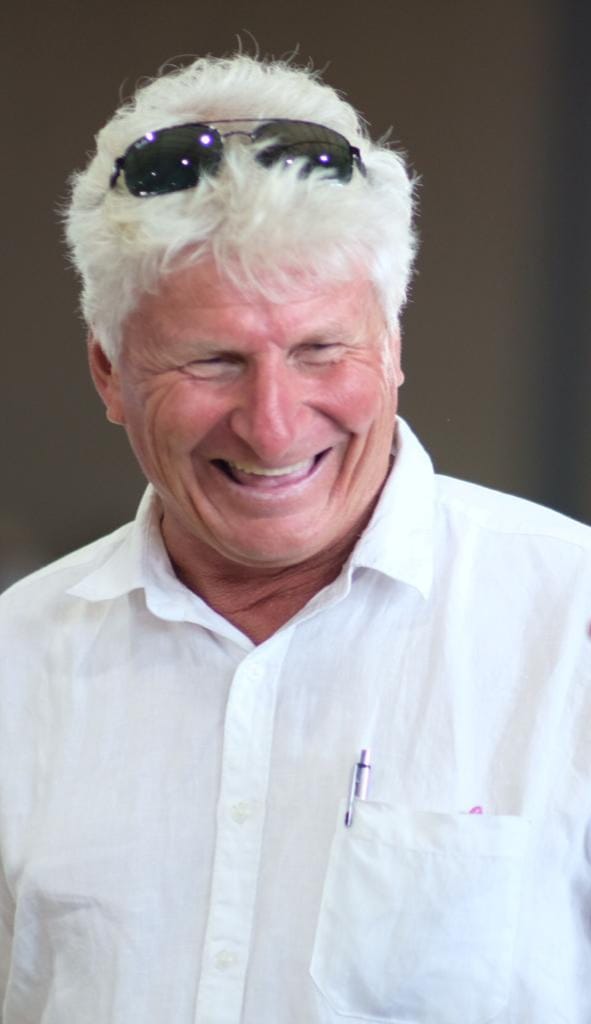
Jan Mantel’s Millstream Stud Farm has quietly evolved into one of the breeding industry’s steadily ascending operations, consistently holding its own among South Africa’s leading farms without losing the identity of a hands-on, boutique establishment.
Millstream has enjoyed an outstanding opening quarter to 2026. In March, Mantel sold a colt by Vercingetorix out of Gimme Dat (Gimmethegreenlight) for R2,6-million at the 2026 Race Coast Cape Premier Yearling Sale.
The momentum continued in April when a colt by Rafeef out of Driving Miss Daisy (Master Of My Fate) realised R2-million at the Bloodstock South Africa National Yearling Sale, where Millstream achieved an impressive average of R1,112-million from the four yearlings it offered.
On top of that, three Millstream graduates – Grand Empire, La Pulga and The Ultimate King – are among the 2026 Hollywoodbets Durban July entries this year. Winchester Sprint Cup winner, All The Rage, is the farm’s other current flagbearer.
Mantel uses a single phrase when reflecting on the road that eventually led to Millstream Stud and its growth in recent years: “It was meant to be.”
His journey was never a straight line, nor the result of a carefully drawn blueprint. Rather, it was a natural progression of happenings, opportunities and unexpected turns which, only in hindsight, revealed themselves as stepping stones toward the establishment of the farm in 2014.
Perhaps one of the earliest pieces in the puzzle was Jan being born into the formidable Snaith racing family. Sharing the same mother as Chris Snaith, he grew up under the influence of an older half-brother who became both mentor and teacher during his formative years.
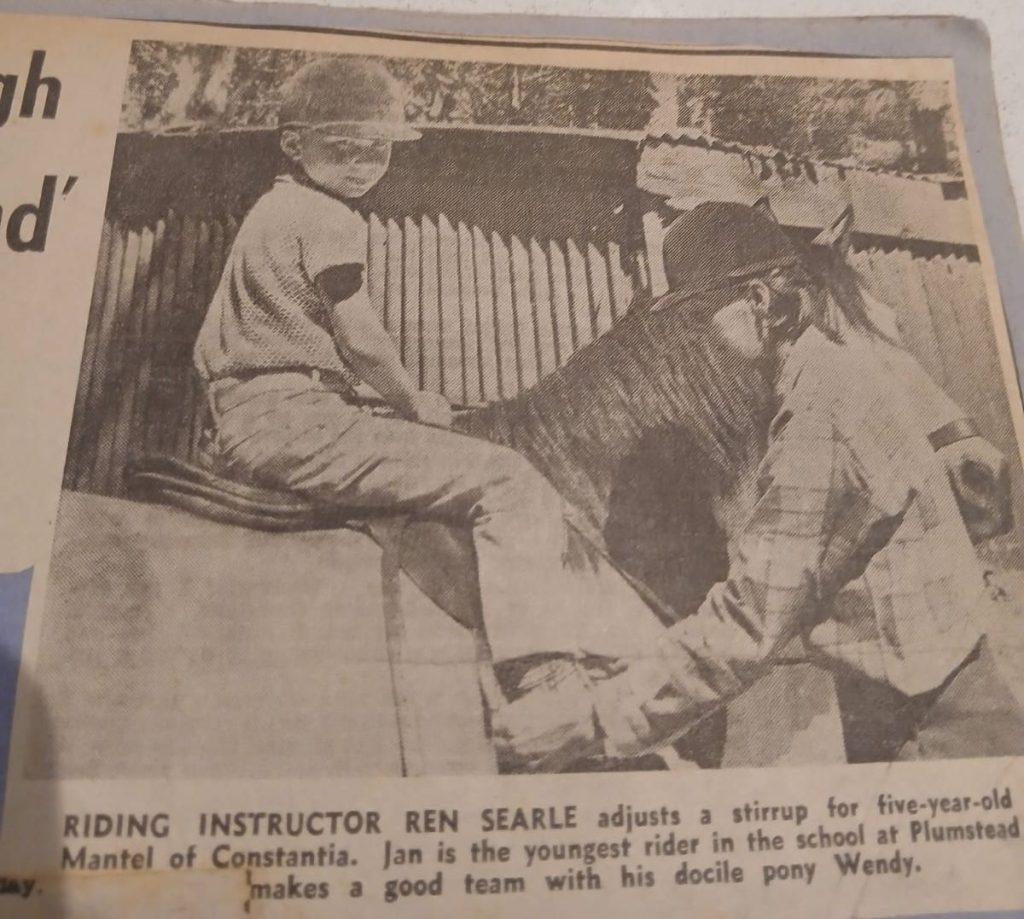
Among the memories Jan shared was a photograph of himself as a five-year-old on horseback. The youngest rider at the Blackwell Riding School in Plumstead, he was already besotted with his pony, Wendy, and developing a love affair with horses that would shape much of his life.
His riding education continued when Snaith, Mike Bass and Fred Blomkamp established a riding school in Muizenberg. It was there that Jan further honed his skills before later helping Snaith with basic stable duties after his half-brother launched his training career from a stable yard near the Muizenberg beachfront.
“I did everything from mucking out stables to transporting horses to the racetrack, and even tried my hand at farriery,” Jan recalled.
A few more formative and demanding years followed when Jan enrolled for compulsory military service. There, another chapter of his equestrian journey unfolded when he was assigned to the South African Defence Force’s cavalry division as a mounted trooper in what was then South West Africa, carrying out duties along the Angolan border.
Jan acquired his foundational stud farm skills as something of an apprentice under Tommy Foulkes at Normandy Stud before receiving his first opportunity to manage a breeding operation.
That chance came through businessman John Fowler, who hoped to launch a stud career for Smackeroo (Mexico II), the Grade 1 Computaform Sprint winner who had raced in the colours of the Harmse brothers and was trained by Jean Barnard.
In the late 1970s, Fowler established the venture on his farm at Faure, south-west of Stellenbosch, where Smackeroo was expected to attract a fair book of mares. However, the fledgling operation struggled for support and the stallion was ultimately unable to establish himself at stud.
Another important step on the journey followed when Chris Snaith introduced Jan to his patron, Shirley Pfeiffer of Rainbow Chickens fame. Jan was entrusted with developing her 165-hectare property near Wellington into a breeding operation and became instrumental in securing an adjoining property as the venture expanded.
Named Arc-En-Ciel in keeping with the Rainbow theme, Pfeiffer’s farm became Jan’s next major project. Over seven years he built the operation from the ground up, establishing stables, paddocks and the foundations of a working breeding farm before an even greater opportunity emerged in 1996.
Jan’s achievements at Arc-En-Ciel opened another door when Sabine Plattner appointed him to undertake a similar project at her newly established La Plaisance farm in George. The operation developed successfully within a few years and became an important breeding base supporting the growing ambitions of Plattner Racing.
Then came another unforeseen twist in the journey. When Plattner reorganised her racing management structure in 2010, Jan, along with bloodstock consultant Jehan Malherbe and trainer Brett Crawford, departed the operation. It was, he recalled, a time of unexpected turmoil.
“This was a setback my family and I had to navigate, and the years that followed were not easy,” Jan reflected.
Jan moved to Tulbagh, where he was tasked with developing a farm project for David Kerrison. The venture was initially linked to Kerrison’s ambition of creating a Glastonbury-style festival, but the plans never fully materialised and, in 2012, the property was sold to the late Georg Kirchner of the wine estate Druk My Niet.
During that period, in August 2012, Jan was involved in a serious motor vehicle accident that left him with broken legs and a fractured pelvis. He spent eight days in a coma and recalls an unexplained vision of “Arabians in full regalia” – something he jokingly attributes to the medication administered during his treatment.
Recovery eventually brought a new opportunity when Jan learnt that the old Riverworld Stud was available to rent.
“With my leg still in a full brace, my wife Nicky and I started out at Riverworld. Dennis Evans was one of our first clients and we had the privilege of looking after and breaking in Legislate, with Felix Coetzee helping us and doing much of the hard work,” Jan recalled.
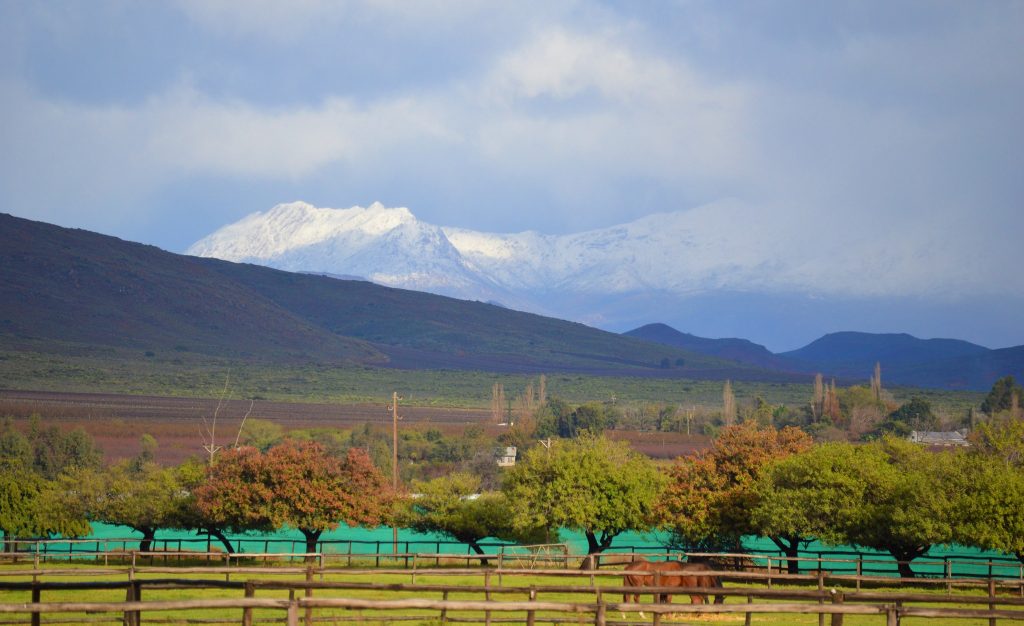
This became a period of taking stock and reassessing his future at a time when no obvious path lay ahead. Jan was determined to have a farm to call his own, and set out in search of a suitable property to purchase. After several months of travelling through the Western Cape and Karoo, he eventually came across a farm near Robertson in the Klein Karoo.
Known as Dageraad Farm, it was a tranquil property nestled between the mountains outside Robertson and owned by a Dutch warmblood breeder.
“This was exactly what I had been looking for, but the banks required a 50% deposit to secure the deal and, with the purchase price already stretching the budget, I was snookered,” Jan recalled.
Then came another of those moments that seemed to appear from nowhere. The answer arrived through British entrepreneur Ray Kirsch, who happened to be part of Chris Snaith’s regular poker circle.
“Ray mentioned that he was looking for a South African investment and became interested when Chris spoke to him about an opportunity in thoroughbred breeding.
“He came through to Robertson to see the farm and meet me, and we hit it off immediately. He loved the property as much as I did. We sat down, worked through a deal, Ray provided the required deposit and, just like that, we were in business as partners in what would become Millstream Farm.”
Jan moved onto the farm in August 2014 with only 12 mares, but lots of hope and renewed energy. Those first few mares included his home bred, Yellow Card (Trippi) who produced Grade 1 Cape Guineas-placed Macthief (Time Thief) and Grade 3 Poinsettia Stakes winner Vihaan’s Pie (Futura). Macthief was exported to Hong Kong.
A couple of months later, the story delivered another of those moments that seemed almost impossible to script. Following recommendations from Mike de Kock and Jehan Malherbe, Millstream was chosen as a boarding facility by a leading Arabian Sheikh – someone that resembled the figures from his unexplained vision while in a coma.
Within a short space of time, 32 mares arrived at the farm.
“Sheikh Mohammed bin Khalifa Al Maktoum’s Al Adiyaat, who at the time had major interests in racing and breeding in South Africa and Dubai, gave us a timely lift. I remain extremely grateful to him, as well as Mike and Jehan, for that support,” Jan said.
While Al Adiyaat has scaled back its global involvement considerably, horses such as Greaterix, Grand Empire and The Ultimate King remain important standard-bearers with promising futures still ahead.
The pipeline continues as well, with a full-sister to The Ultimate King (out of Fayrooz) entered for the BSA August Sale, while a full-sister to Grand Empire (out of Palace Of Dreams) is also set to go through the ring.
From his own relatively small broodmare band, Jan has also enjoyed notable success with Listed winners Mount Anderson, Baratheon and Get Impressed, as well as Buster Barnes, the outstanding Zimbabwean performer.
With Jan obtaining full ownership after his partner Kirsch retired, Millstream has also become home to the mares of several high-profile clients. They include Gary Player – whose joint-owned Horse of the Year Dave The King was raised on the farm – Heinrich Kuhn, whom Jan describes as “a lucky owner” he hopes will enjoy similar success as a breeder, and UK-based Bjorn Nielsen of Stradivarius fame.
Among Nielsen’s mares is Really Royal (Captain Al), whose first foal, Kalahari King, is regarded as a colt well above average.
“Bjorn has also purchased some older, established mares because he wants to breed fillies capable of continuing important female lines, including Louvre (Doowaley), the dam of Trip To Fortune,” Jan explained.
Although Nielsen’s runners are trained by Justin Snaith, Jan said the decision to board his mares at Millstream had little to do with the family connection.
“Bjorn did extensive homework. He visited a number of farms across different regions before settling on Millstream because of the quality of its limestone-rich soil and the suitability of its flood plain.”
Jan believes the combination of soil, terrain and climate makes the Robertson region one of South Africa’s outstanding breeding areas. “We have relatively low rainfall and an ideal climate for raising horses,” he explained.
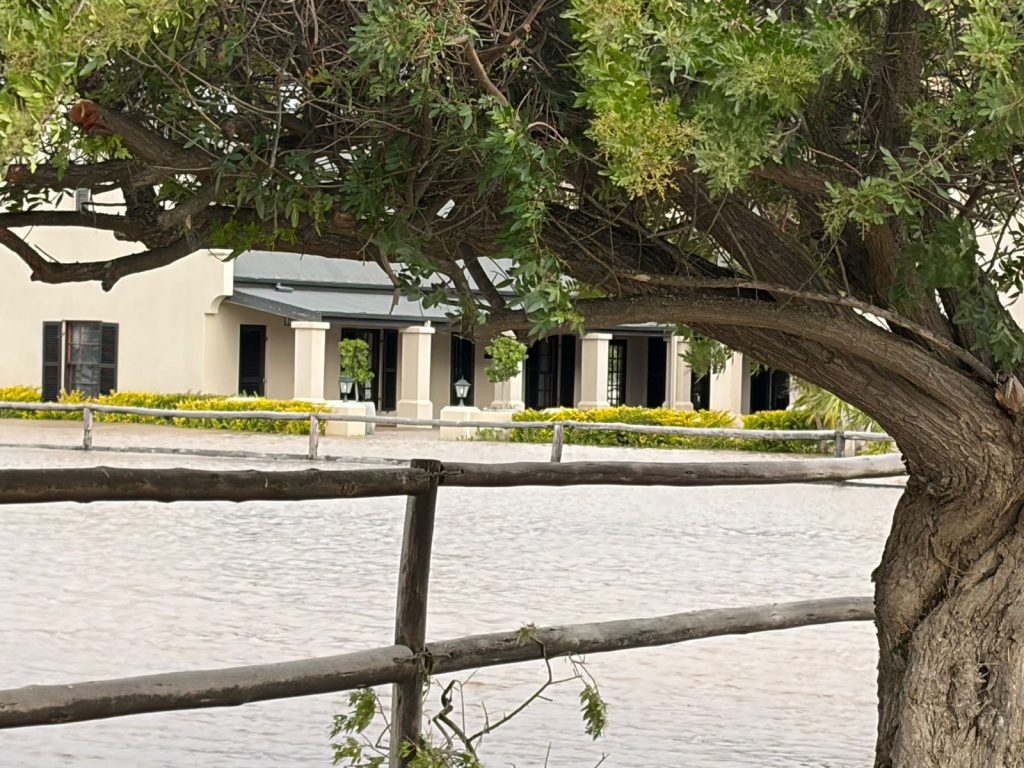
The region’s strengths were unexpectedly challenged recently when heavy rains caused the Breede River to overflow. Millstream’s beautifully renovated guest accommodation, managed by Nicky, was flooded and a number of horses had to be moved up a long incline to safer ground.
“One of our long-serving staff members was convinced it could never happen because he had not seen flooding of that nature in his 20 years here,” Jan recalled. “But it did, and restoration work will keep us busy for the next several months. Nicky had been instrumental in bringing the guest house into popular service. It was doing well until this freak flooding event. We will start back up, even stronger.”
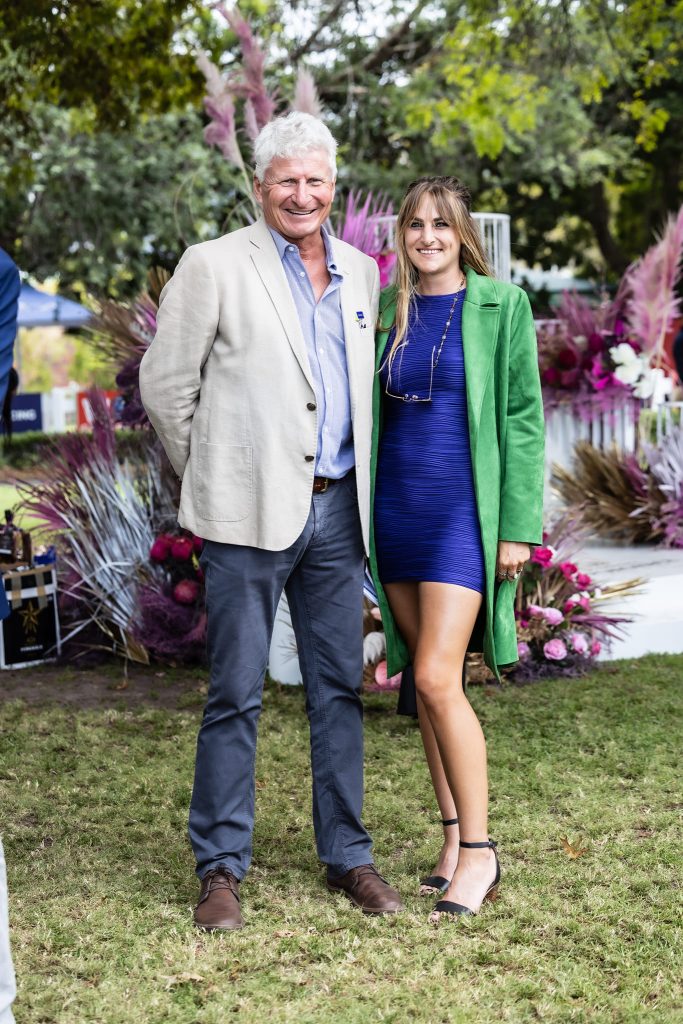
Jan speaks warmly and with obvious appreciation of his effervescent and conscientious assistant, Tarryn Nel, who has now spent more than a decade at his side as his trusted right-hand woman.
“Tarryn arrived here out of nowhere back in 2015,” he joked. “Nobody wanted her so we took her on. She was so thin I had to feed her extra well so we could notice her. Our vet, the late Dr Jim Antrobus, nicknamed her ‘Dingle Bat’.”
But between himself, Tarryn and long-time farrier Ian Gird, Jan has a good thing going and much to look forward to. “The farm is full, we have 60 mares, and we’re focused on producing good, sound horses.”
Jan said his approach centres on breeding to conformation, carefully matching stallions to mares according to size, balance and athleticism, although he admits to favouring a touch of speed influence. He also makes use of G1 Goldmine and TrueNicks for his matings.
“We try to balance all the right factors, but we also have to remember that our horses are destined for the sales ring and must appeal to buyers. When you take a horse to auction, you only get one chance. For commercial breeders, everything comes back to that.”
All photos supplied